
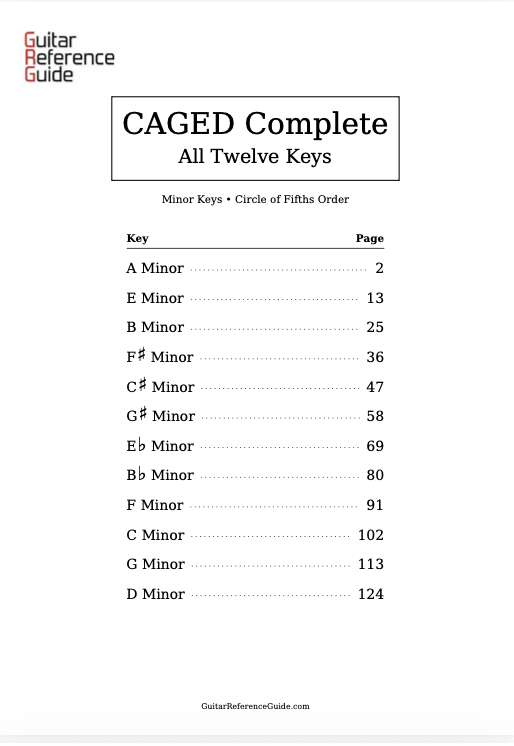
All 12 Minor Keys. Chords, Arpeggio’s, Pentatonic and Diatonic (Aeolian) scales in every key and position. 138 Pages.
About the CAGED System for Minor Chords
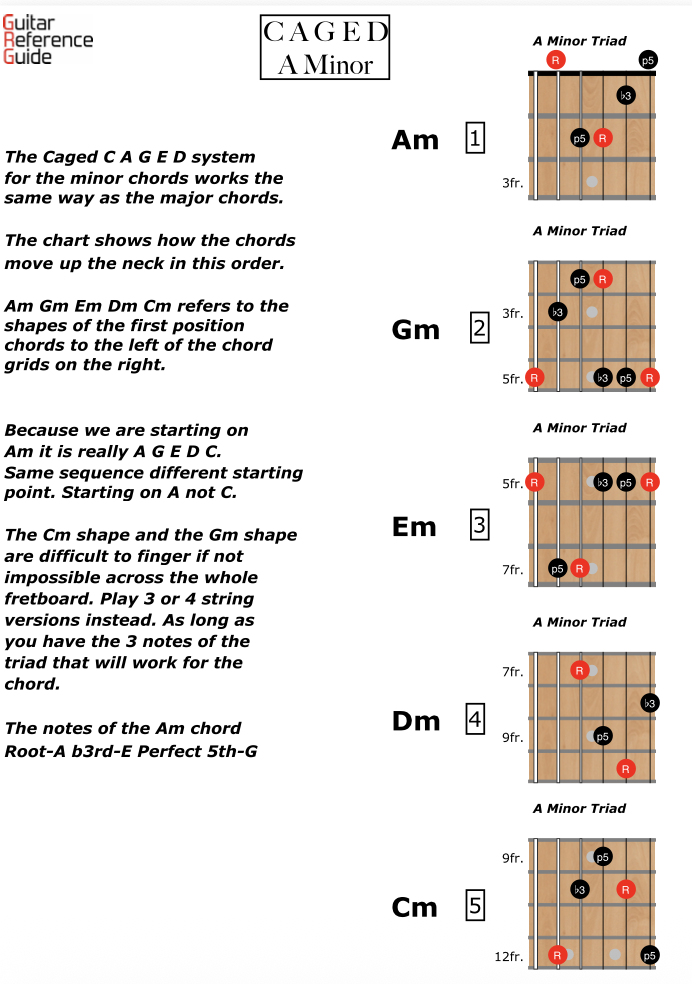
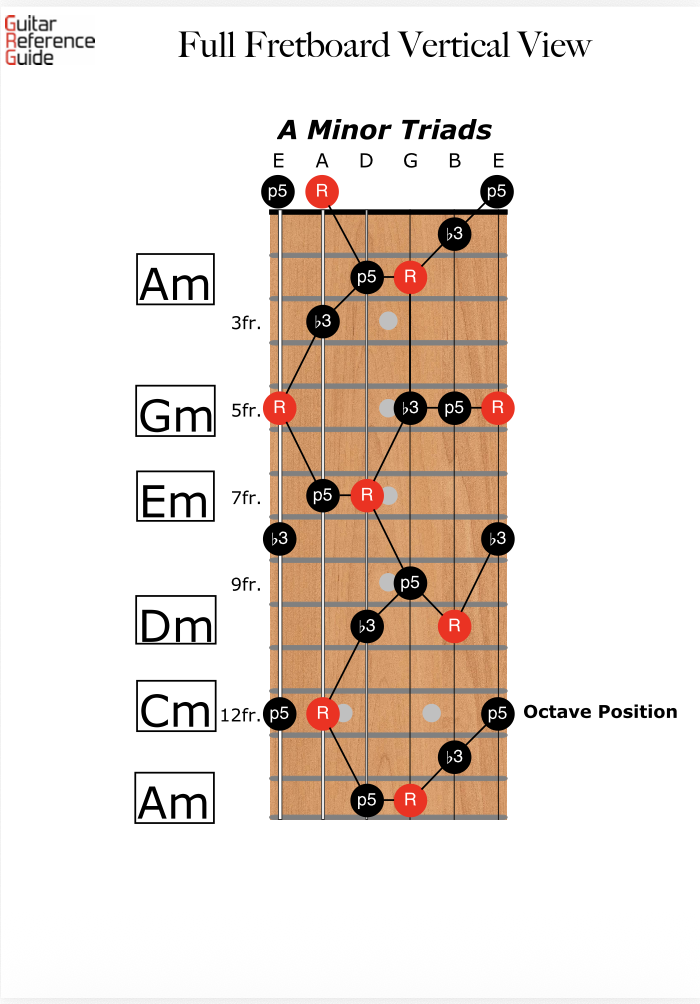
Most guitarists learn CAGED with major chords. The same idea works for minor. Every minor chord on the neck comes from one of five open minor shapes: Am, Gm, Em, Dm and Cm. If you slide those shapes up the neck, they link together into one continuous map of the fretboard, and the order is the same in every key.
Am, Em and Dm are shapes you already know. Cm and Gm are harder, and in some positions they can’t be fingered as full six-string chords. That’s fine. The idea is to see each shape, then play the three- or four-string version that holds the root, ♭3 and 5. Those smaller voicings are the ones you’ll use most in real playing anyway.
Why learn it?
- No more getting stuck at the 5th fret. You’ll know where every minor chord is, all the way up the neck.
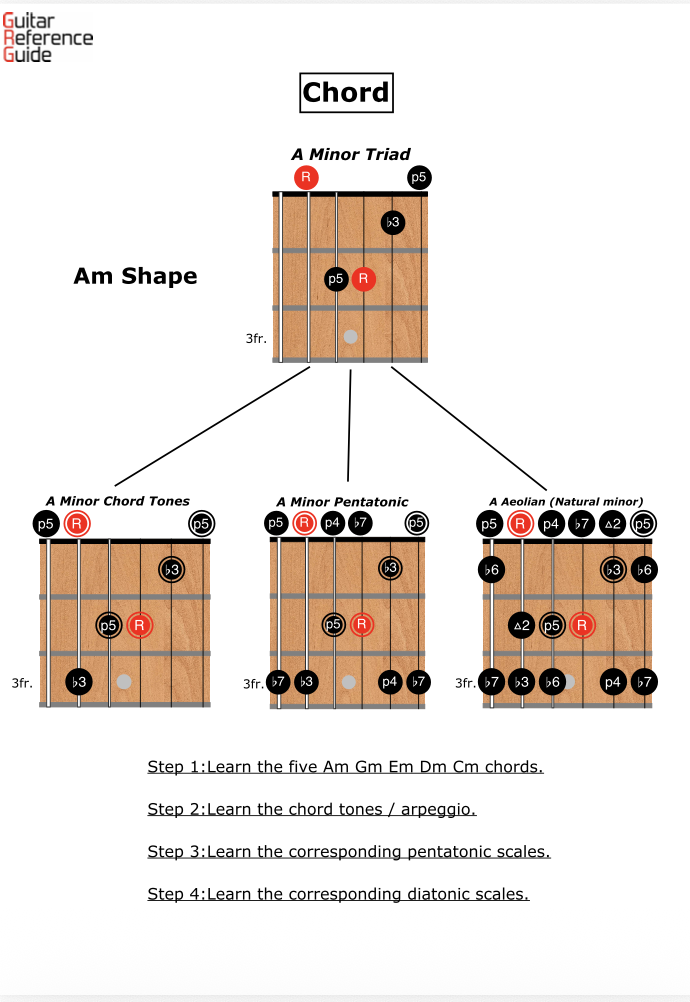
- Scales and arpeggios connect to chords. Each minor pentatonic and Aeolian scale pattern sits around a chord shape you already recognize, so solos follow the changes instead of floating over them.
- One system, twelve keys. Learn the five shapes and their order once, then move them to any key.
What’s in each key
- An introduction to the minor CAGED system
- A full-fretboard view of all five shapes linked together
- Each of the five minor shapes with its chord tones (root, ♭3, 5)
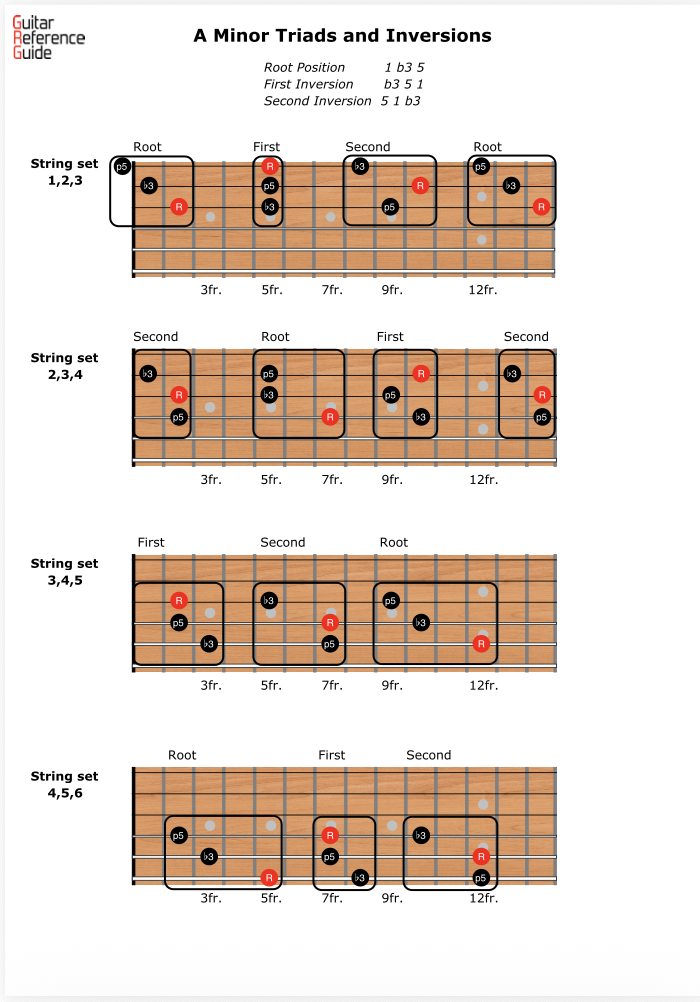
- Minor triads and inversions on four string sets
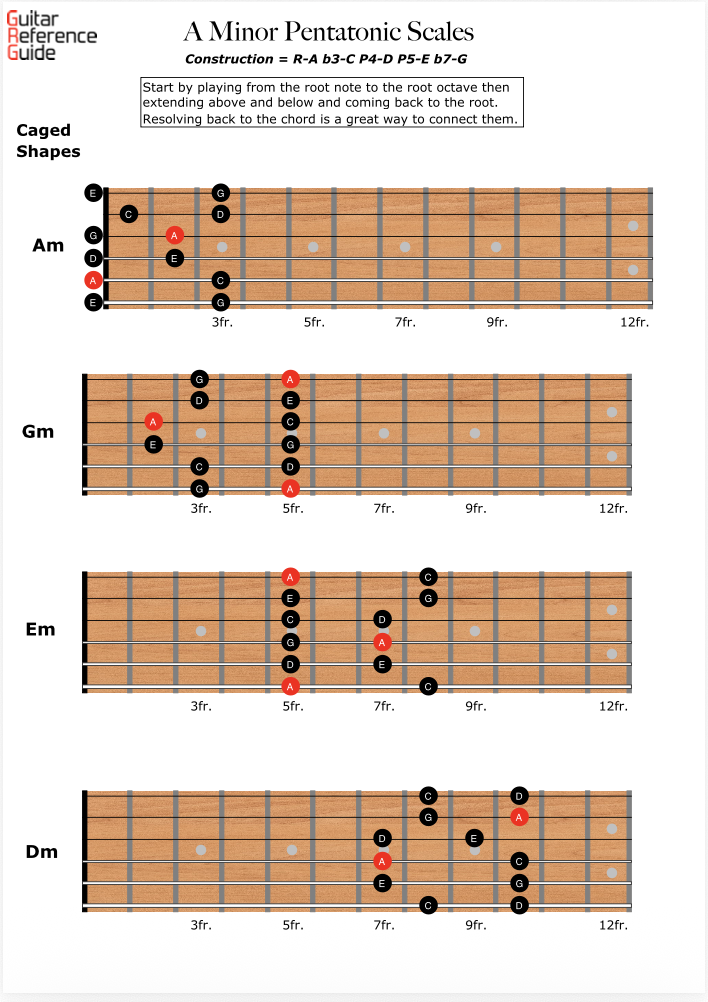
- Minor pentatonic scales in all five shapes, plus two sliding patterns that connect them
- The natural minor scale (Aeolian mode) in all five shapes
Every packet uses the same layout, so once you’ve worked through one key you can get around any of the others right away.

